



Best Google Maps Review Tool in 2026
Everyone Wants More Reviews—Almost No One Gets Them Consistently
Let’s be honest for a second.
Every local business owner says the same thing:
“We just need more Google reviews.”
But when it comes time to actually get them?
- Customers forget
- Staff doesn’t follow up
- Emails get ignored
And suddenly… growth stalls.
So people start searching:
“What’s the best Google Maps review tool?”
“How do agencies get so many reviews?”
And that’s where things get interesting.
Because there are tools out there—but most of them don’t do what you think.
What People Think a Google Review Tool Does
Most users expect something simple:
“Send a link → customer clicks → leaves review → done.”
That’s tools like:
- Review request platforms
- SMS/email follow-up systems
And yeah—they work… a little.
But here’s the problem:
They depend entirely on customer motivation.
And customers?
They’re… not reliable.
The Reality: There Are Two Types of “Google Review Tools”
Let’s split this cleanly.
1. Passive Tools
These include:
- Email review requests
- SMS reminders
- QR codes
They basically say:
“Hey customer, please leave us a review.”
And then… you wait.
2. Active Systems
This is where things shift.
Instead of hoping for reviews, these systems:
- Create reviewer accounts
- Simulate user behavior
- Generate consistent review activity
This is where advanced tools—like PVACreator’s customized Google Maps setup—quietly sit.
Not widely advertised. Not talked about openly.
But heavily used by people who understand scale.
So… What Is the “Best” Google Maps Review Tool?
Here’s the honest answer:
It depends on how much control you want.
If You Want Safe but Slow Growth
Go with:
- Review request platforms
- CRM integrations
- Customer follow-ups
Best for:
Small businesses
Beginners
Long-term organic growth
If You Want Scalable, Controlled Growth
You need something more advanced.
That’s where tools like PVACreator (Google Map Review Version) come in.
Instead of relying on customers, they allow you to:
- Build review profiles
- Control timing and frequency
- Simulate real user behavior
- Scale across multiple listings
Why Advanced Users Don’t Rely on Customers Anymore
Here’s a slightly controversial truth:
The businesses winning on Google Maps aren’t just “asking nicely.”
They’re managing their reputation like a system.
Because:
- Competitors are doing it
- Rankings depend on activity
- Visibility = revenue
And relying only on customers?
That’s unpredictable.
What Makes a Good Google Review Tool
If you’re evaluating options, this is what actually matters:
1. Consistency
Can it generate reviews over time—not all at once?
2. Account Quality
Are the reviewer profiles believable?
3. Behavior Simulation
Does it act like a real user—or a bot?
4. Control
Can you adjust:
- Frequency
- Timing
- Volume
5. Scalability
Can it handle:
- Multiple locations
- Multiple clients
Most tools fail at 3 out of 5 of these.
Where PVACreator Fits In
Let’s not oversell it.
This isn’t some magic “click once, rank #1” tool.
What it is:
A customizable system for review generation
Built for people who want control
Designed to scale
What makes it different:
- You’re not locked into a fixed workflow
- It can be tailored to your strategy
- It integrates with account creation + proxies
In other words:
It’s closer to a framework than a simple tool.
Real Talk: Risks vs Rewards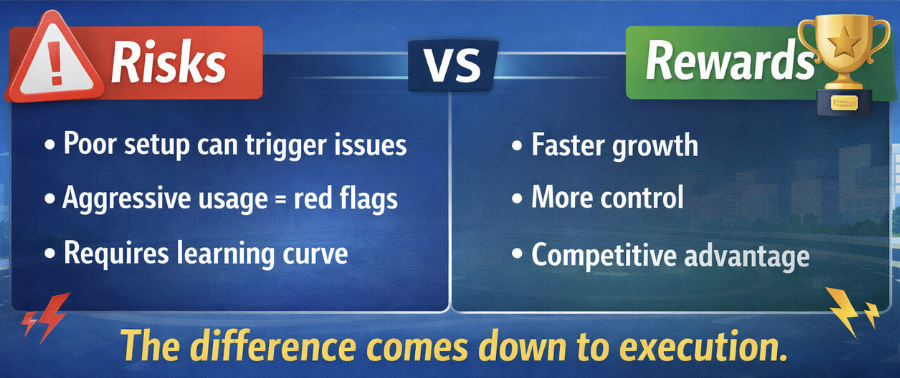
Let’s not pretend there’s zero risk.
Risks
- Poor setup can trigger issues
- Aggressive usage = red flags
- Requires learning curve
Rewards
- Faster growth
- More control
- Competitive advantage
The difference comes down to execution.
A Smarter Strategy
The best approach?
Not one or the other.
Hybrid strategy:
- Use real customers for authenticity
- Use automation for consistency
This gives you:
Natural variation
Stable growth
Lower risk
Why This Topic Is Blowing Up in 2026
Simple.
Google Maps is becoming:
- More competitive
- More review-driven
- More algorithmically sensitive
And businesses are realizing:
Reviews aren’t just feedback—they’re ranking signals.
What Should You Use?
If you’re just starting:
Stick with basic tools
Focus on real customers
If you’re scaling or running multiple listings:
You’ll eventually need more control
That’s when advanced systems make sense
Conclusion
The real question isn’t:
“What’s the best Google Maps review tool?”
It’s:
“Do I want to hope for reviews… or engineer them?”
Because once you see the difference…
You can’t unsee it.